
Budgeting as a Couple: How to Manage Money Together (2026)
Talking about money isn't always easy. One person likes to save. The other enjoys spending on experiences. One tracks every purchase. The other checks their bank balance once a week.
These differences are completely normal - but without a shared plan, they can lead to misunderstandings over time.
A couple's budget isn't about controlling each other's spending. It's about deciding how you'll manage shared financial responsibilities while still respecting individual priorities.
Whether you've just moved in together, recently married, or have shared finances for years, creating a budget together can reduce stress and help you work toward common goals. For the split-method and app side of this, see our How Couples Should Split Bills and Best Expense Apps for Couples guides.
Why Budget Together?
Budgeting gives both partners clarity. Instead of wondering where the money went each month, you'll know how much you're spending, which bills are coming up, whether you're saving enough, how much discretionary money you have, and whether you're reaching your financial goals.
Most importantly, budgeting replaces assumptions with shared expectations.
Step 1: Decide What Will Be Shared
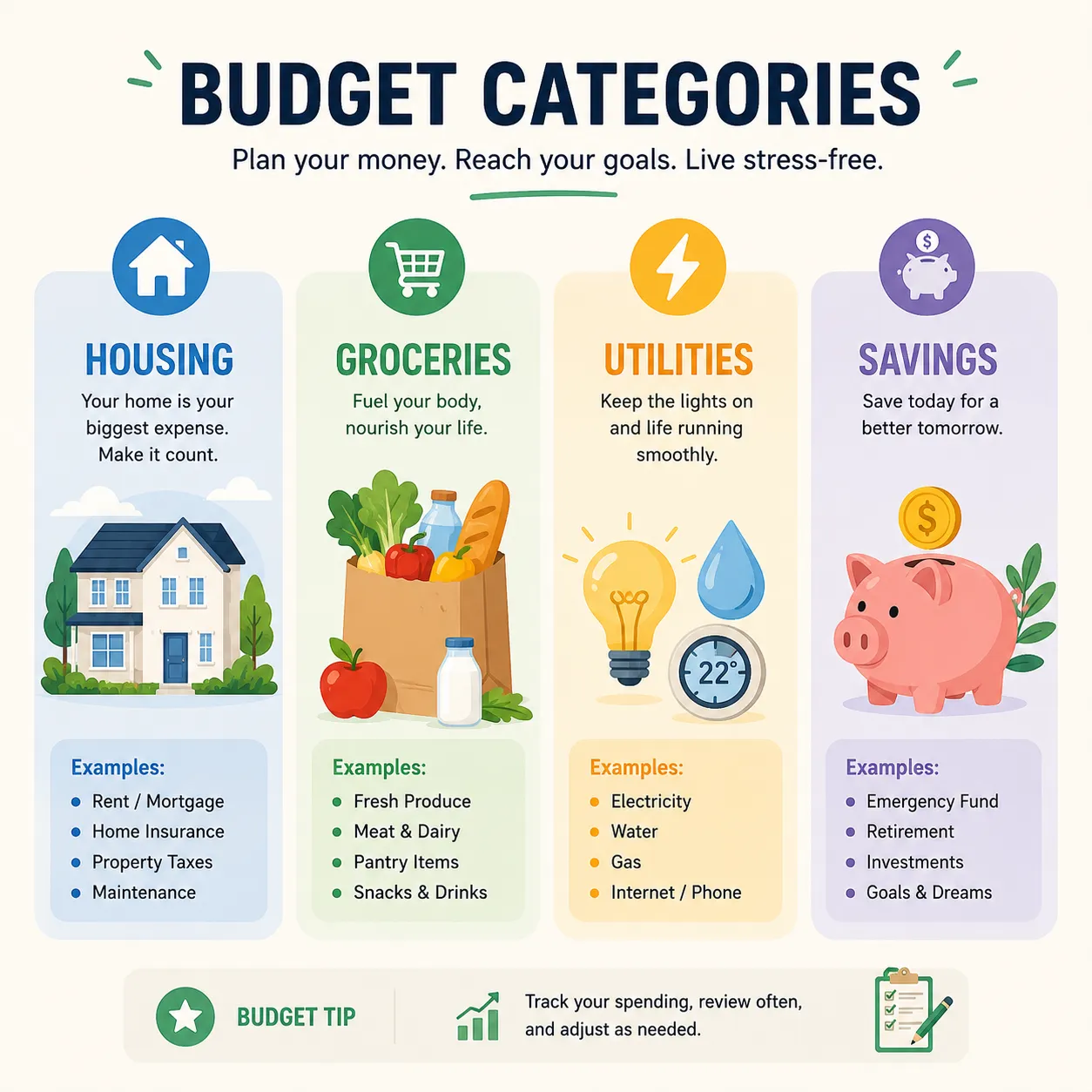
Not every expense needs to become a joint expense. Most couples start by sharing housing (rent or mortgage, property fees, home insurance), utilities (electricity, water, internet, gas), groceries (food, household supplies, cleaning products), transportation (fuel, parking, public transport), and entertainment (streaming subscriptions, dining out, weekend activities).
Personal purchases usually remain separate - clothing, hobbies, gifts, and personal subscriptions.
Step 2: Choose How You'll Split Expenses
There isn't one correct method.
50/50 split - best when incomes and spending habits are similar. Easy to understand, easy to maintain.
Income-based contributions - if one partner earns substantially more, contributing based on income often feels fairer:
| Partner | Income | Contribution |
|---|---|---|
| Alex | $6,000 | 60% |
| Taylor | $4,000 | 40% |
Instead of splitting every bill equally, each person contributes according to their income.
Divide responsibilities - one partner pays rent and internet, the other pays groceries, utilities, and streaming services. This works well if the totals stay relatively balanced over time. See our How Couples Should Split Bills guide for a deeper look at these methods.
Step 3: Set Financial Goals Together
Budgeting isn't only about paying bills - it's also about planning for the future. Short-term goals might include a vacation, new furniture, an emergency fund, or paying off credit cards. Long-term goals might include buying a home, a wedding, children, retirement, or investing.
Shared goals make budgeting feel purposeful instead of restrictive.
Step 4: Create Monthly Spending Categories
Example monthly budget:
| Category | Budget |
|---|---|
| Housing | $2,000 |
| Utilities | $250 |
| Groceries | $700 |
| Transportation | $250 |
| Entertainment | $300 |
| Dining out | $250 |
| Savings | $800 |
Review these numbers every month. Budgets should evolve as your circumstances change.
Step 5: Track Shared Expenses
A budget tells you what you planned to spend. An expense tracker tells you what actually happened. These are different things.
For example: budget for groceries is $600, but actual spending is $742. Without tracking expenses, you wouldn't know why the budget wasn't met.
Many couples use an expense-sharing app to keep their budget grounded in real spending.
Common Budgeting Methods
Zero-based budget - every dollar receives a purpose before the month begins. Best for detailed planners, debt repayment, and saving aggressively.
50/30/20 rule - allocate income into 50% needs, 30% wants, 20% savings. Simple and beginner-friendly.
Envelope budgeting - assign spending limits to categories. Once a category is empty, spending stops until next month.
Common Budgeting Mistakes
Never reviewing the budget - budgets should change as income, expenses, and life change. Review it monthly.
Tracking every personal purchase - shared budgets work best when they focus on shared expenses. Allow each partner flexibility for personal spending.
Ignoring small expenses - coffee, streaming subscriptions, food delivery. Small purchases often become surprisingly large monthly expenses.
Treating the budget as a punishment - a budget isn't about saying "no." It's about deciding where your money should go.
Using an App to Budget Together
Many budgeting apps focus on individual finances, but couples often need something different. A useful app should help you track shared expenses, split bills fairly, record recurring expenses, see spending history, and keep both partners synchronized.
Rather than replacing your budget, an expense-sharing app complements it by providing accurate records of your day-to-day spending. See our Household Expense Tracker, Shared Household Budget, How to Split Bills Fairly, and Best Bill Splitting Apps guides for the broader picture, or Free Splitwise Alternatives if you're weighing Squara against the more established name in this space.
Why Squara Works Well Alongside a Couple's Budget
Squara isn't designed to replace a full budgeting app. Instead, it solves one of the biggest challenges couples face: tracking shared expenses accurately. As you record groceries, utilities, subscriptions, travel costs, and household purchases, both partners always see the same balances and history.
Helpful features:
- Unlimited expense tracking
- Equal, percentage, and custom splits
- Recurring expenses (Premium)
- Activity history
- Settlement confirmation
- Multi-currency support
- No advertisements
By separating budgeting from expense tracking, couples can plan their spending while keeping an accurate record of what actually happened.
A Budget Is a Plan, Tracking Is the Record
While building Squara, I realized that budgeting and expense tracking solve two different problems. A budget is your plan - it answers "how much do we want to spend?" Expense tracking is your record - it answers "what actually happened?" Many couples already know their monthly budget for groceries or utilities, but without tracking shared purchases, it's difficult to see whether they're sticking to that plan. That's why Squara focuses on shared expense tracking, giving couples accurate data that makes budgeting far more effective.
Final Thoughts
Budgeting as a couple isn't about following a perfect formula - it's about creating a system that works for both of you.
Some couples split everything equally. Others contribute based on income or divide responsibilities. Whatever approach you choose, regular communication and a shared understanding of your finances matter far more than the exact percentages.
A budget helps you decide where your money should go. An expense tracker helps you see where it actually went. Using both together creates a simple, practical system for managing shared finances while leaving room for individual independence. See our Best Personal Expense Tracker Apps guide for the broader landscape of options.
Frequently asked questions
Related articles
 Couples
June 14, 2026 · Artyom
Best Expense Apps for Couples (2026) – Track Shared Expenses Easily
Compare the best expense apps for couples. Track shared expenses, split bills fairly, manage household budgets, and stay organized with the right app.
 Couples
June 16, 2026 · Artyom
Couples Expense Tracker: Best Apps & Tips (2026)
Looking for a couples expense tracker? Learn how to track shared expenses, split bills fairly, manage household costs, and compare the best apps for couples.
 Couples
June 18, 2026 · Artyom
How Couples Should Split Bills: 7 Fair Ways to Share Expenses
Learn how couples should split bills fairly. Compare 50/50, income-based, and custom approaches, plus practical tips for managing shared expenses without arguments.
Squara is available on iOS and Android
Download it now, or leave your email for product updates.