
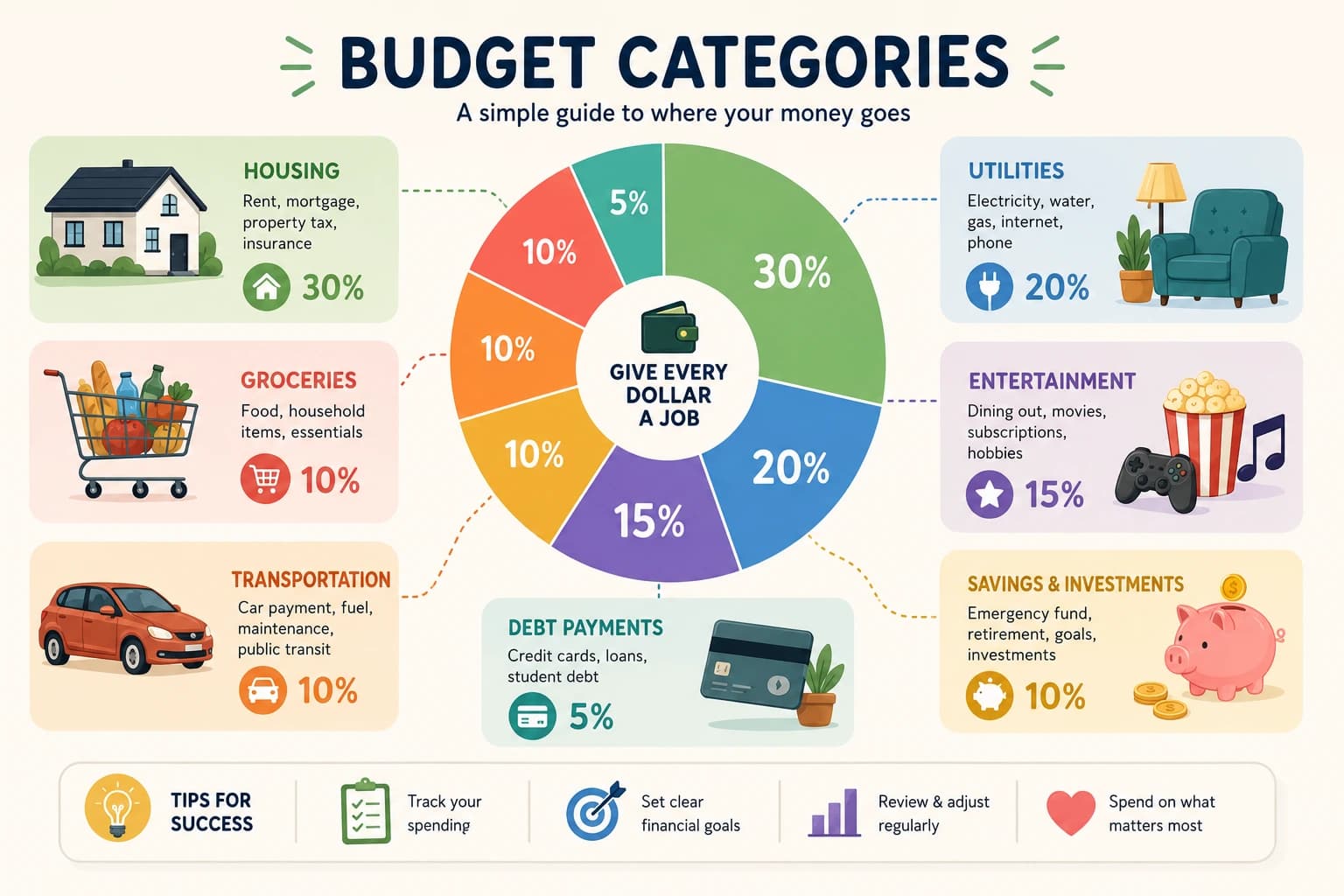
Shared Household Budget: How to Budget With Roommates or Partners
Managing a home is about more than paying rent or a mortgage. Every month brings groceries, utility bills, internet, subscriptions, cleaning supplies, and dozens of other expenses that need to be shared fairly.
Without a plan, it's easy to overspend - or lose track of who paid for what.
A shared household budget helps everyone understand where the money is going, how much each person contributes, and what upcoming expenses to expect.
Whether you live with roommates, your partner, or family, creating a household budget can reduce financial stress and make shared living much more enjoyable. Once you have a budget in place, see our Household Expense Tracker and Roommate Expense Tracker guides for tracking the actual spending against it.
What Is a Shared Household Budget?
A shared household budget is a financial plan that tracks income, shared expenses, and recurring bills for everyone living in the same home. Unlike a personal budget, it focuses only on expenses that benefit the household - rent or mortgage, utilities, internet, groceries, cleaning supplies, household maintenance, streaming subscriptions, furniture, and emergency household expenses.
The goal isn't to control individual spending - it's to keep shared finances organized.
Roommates
A shared budget makes it easier to manage rent, utilities, shared groceries, and household supplies. Everyone knows what to expect each month. See our How to Split Rent and How to Split Utilities guides for the specific bills.
Couples
Couples often combine some expenses while keeping separate personal finances. A shared household budget provides visibility without requiring a joint bank account.
Families
Families can use a shared budget to organize bills, groceries, childcare, school expenses, and home maintenance.
Shared Housing
Student houses, co-living spaces, and long-term rentals benefit from a single place to track recurring household costs.
Why Every Shared Household Needs a Budget
Many people think budgeting is only about saving money. In reality, it's also about avoiding surprises. A shared budget helps you plan monthly expenses, prevent duplicate purchases, understand spending habits, prepare for large bills, and reduce financial misunderstandings.
Even simple budgeting creates more predictable household finances.
Step 1: List Every Shared Expense
Start by identifying all recurring household costs: housing (rent, mortgage, parking, storage), utilities (electricity, water, internet, gas, heating), groceries (food, drinks, cooking essentials), household supplies (toilet paper, cleaning products, laundry detergent, paper towels, dish soap), entertainment (Netflix, Spotify, Disney+, shared gaming subscriptions), and miscellaneous (repairs, furniture, decorations, kitchen equipment).
Step 2: Decide How Expenses Will Be Shared
Not every household divides costs the same way.
Equal split - everyone contributes the same amount. Best when incomes and living arrangements are similar.
Percentage split - contributions are based on income. Common among couples and families.
Custom split - some expenses are divided differently depending on who benefits from them, such as a parking space, private office, or larger bedroom.
Step 3: Set a Monthly Budget
Estimate monthly spending for each category:
| Category | Monthly budget |
|---|---|
| Rent | $2,000 |
| Electricity | $120 |
| Water | $50 |
| Internet | $70 |
| Groceries | $600 |
| Household supplies | $80 |
| Streaming services | $40 |
Having expected amounts makes unusual spending easier to spot.
Step 4: Track Expenses Throughout the Month
A budget only works if it's updated regularly. Instead of collecting receipts at the end of the month, record expenses when they happen. This makes balancing household finances much easier.
Step 5: Review Your Budget Every Month
Household spending changes over time - maybe electricity costs increased, maybe grocery spending went down. A quick monthly review helps keep the budget realistic. Ask which categories exceeded or came in under budget, and whether next month's numbers need adjusting.
Common Household Budget Mistakes
Only budgeting for rent - rent is often the largest expense, but it's far from the only one. Small recurring purchases can easily add hundreds of dollars each month.
Forgetting irregular expenses - furniture, repairs, kitchen equipment, holiday decorations. These don't happen every month but should still be planned for.
Not agreeing on rules - everyone should understand what counts as a shared expense, how expenses are divided, and when payments are due. Clear expectations prevent future disagreements.
Waiting until month-end - recording expenses once a month usually means forgetting purchases. Track them as they happen instead.
Using an App to Manage a Shared Household Budget
Although spreadsheets work for some households, dedicated apps simplify the process considerably. A good household budgeting app should let you track shared expenses, split bills fairly, record recurring expenses, calculate balances automatically, view spending history, and export records if needed.
For households with multiple people contributing regularly, these features save time and reduce mistakes. See our Best Apps for Roommates and Best Expense Splitting Apps roundups for the full comparison.
Why Squara Works Well for Shared Household Budgets
While many budgeting apps focus on personal finances, Squara is built around shared expenses. Instead of trying to manage an individual's spending, it helps groups stay organized by keeping everyone on the same page.
Useful features:
- Unlimited expense tracking
- Equal, exact amount, and percentage splits
- Recurring expenses (Premium)
- Activity history
- Settlement confirmation
- Cloud synchronization
- Multi-currency insights
- No advertisements
Rather than wondering who paid for groceries or whether the internet bill has already been settled, everyone has access to the same up-to-date information.
Budgeting Isn't the Same as Tracking
One thing that surprised me while building Squara was how often people confused budgeting with expense tracking. A budget tells you what you plan to spend. Expense tracking tells you what actually happened. Most shared households need both. You can agree to spend $600 on groceries this month, but unless everyone records grocery purchases as they happen, it's impossible to know whether you're staying within that budget - or who paid for what. That's why Squara focuses on tracking shared expenses accurately, giving households the information they need to make better budgeting decisions.
Final Thoughts
A shared household budget isn't about tracking every dollar perfectly - it's about creating clarity. When everyone understands the household's shared expenses, contributes according to an agreed plan, and records purchases consistently, day-to-day finances become much easier to manage.
Whether you're living with roommates, your partner, or family, a clear budgeting system helps reduce misunderstandings and makes it easier to plan for the future.
Combined with a dedicated expense-sharing app like Squara, managing household finances becomes less about remembering who paid last and more about working together toward a well-organized home. See our How to Split Bills Fairly and How to Split Group Expenses guides for the underlying principles, our Free Splitwise Alternatives guide if you're weighing Squara against the more established name in this space, or, if it's specifically a partner you're budgeting with, our How Couples Should Split Bills and Budgeting as a Couple guides, or our Best Expense Tracking Apps and Best Personal Expense Tracker Apps guides for the full landscape of options.
Frequently asked questions
Related articles
 Roommates
June 8, 2026 · Artyom
Household Expense Tracker: Best Apps & Tips (2026)
Looking for the best household expense tracker? Learn how to track shared household expenses, split bills fairly, and compare the best apps for roommates, couples, and families.
 Roommates
June 10, 2026 · Artyom
Roommate Expense Tracker: Best Apps & Tips (2026)
Looking for a roommate expense tracker? Learn how to track shared expenses, split bills fairly, and compare the best roommate expense tracker apps.
 Roommates
June 4, 2026 · Artyom
Best Apps for Roommates (2026) – Split Bills, Chores & Rent
Discover the best apps for roommates to split rent, track shared expenses, organize chores, and manage household finances. Compare the top free and paid apps.
Squara is available on iOS and Android
Download it now, or leave your email for product updates.