

How to Split Group Expenses Fairly (Without the Stress)
Whether you're organizing a vacation, living with roommates, or sharing everyday costs with friends, keeping track of group expenses can quickly become complicated.
Someone pays for dinner. Someone else books the Airbnb. Another person covers groceries. A few days later, nobody remembers who paid for what.
Instead of relying on memory - or endless group chat messages - a simple system for tracking shared expenses helps everyone stay on the same page.
In this guide, you'll learn the best ways to split group expenses fairly, avoid common mistakes, and choose the right tools for your group. For a deeper look at picking an app, see our Best Expense Splitting Apps and Best Bill Splitting Apps comparisons, or How to Split Bills Fairly for the underlying methods.
Why Group Expenses Become Complicated
Group spending usually starts with good intentions. Someone says, "I'll pay - you can send me your share later." After a few days, there are restaurant bills, fuel, parking, coffee, groceries, tickets, accommodation, and shared household purchases piling up.
Without tracking everything, it's easy to lose track of who owes whom. The larger the group, the more complicated this becomes.
Step 1: Decide How You'll Split Expenses
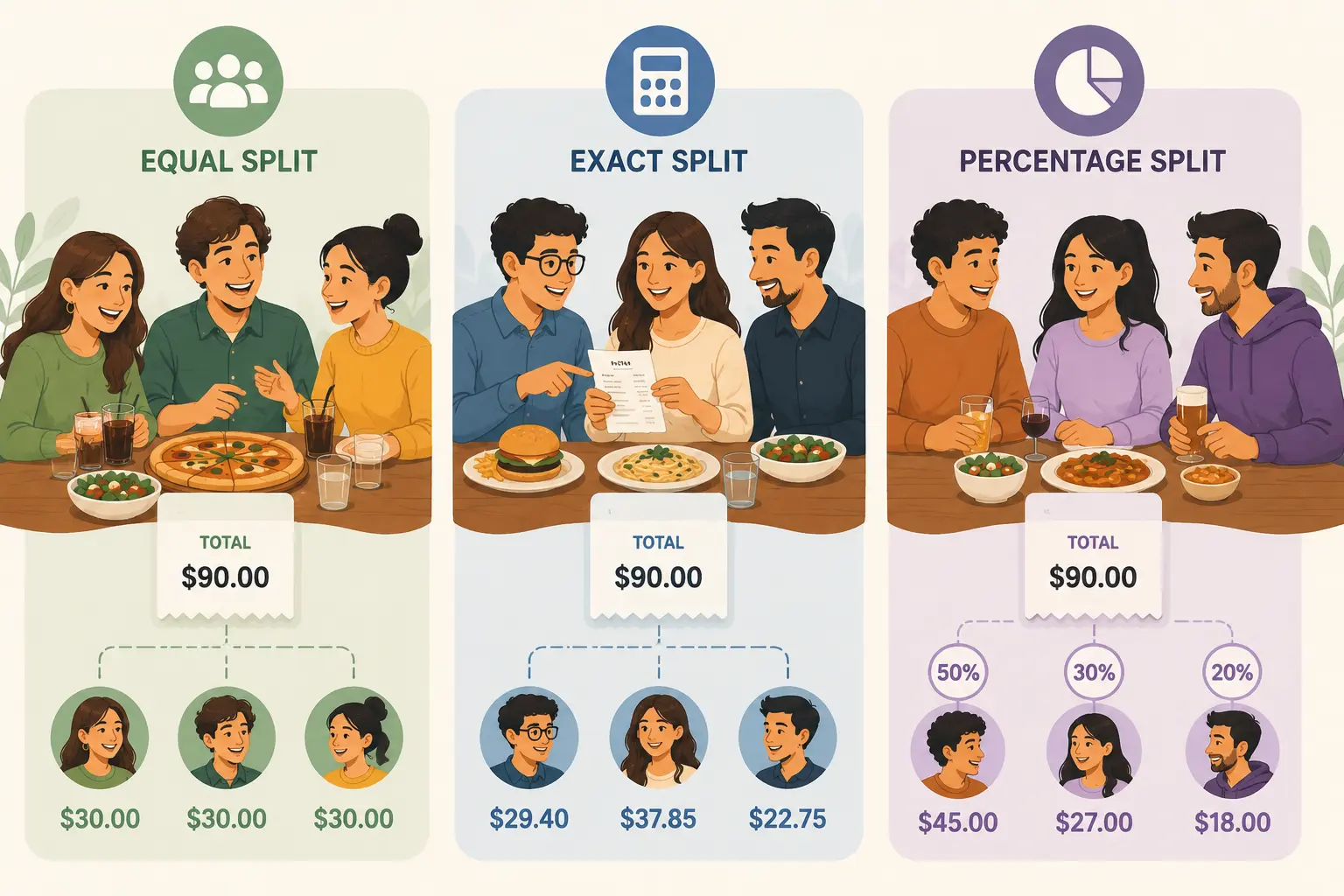
Before spending any money, agree on the rules. This avoids misunderstandings later. The most common approaches are:
Equal splits - everyone pays the same amount. Perfect for Airbnb, utilities, shared groceries, and taxi rides. Example: hotel costs $600 for six friends, everyone pays $100.
Exact amounts - each person only pays for what they actually used. Best for restaurants, shopping, and activity tickets:
| Person | Ordered |
|---|---|
| Alex | $18 |
| Mia | $42 |
| Sam | $27 |
| Chris | $15 |
No one subsidizes someone else's order.
Percentage splits - useful when contributions aren't equal, such as couples, families, or different income levels. One person might cover 70%, another covers 30%.
Step 2: Record Expenses Immediately
One of the biggest mistakes groups make is waiting until the end of the trip. Nobody remembers every coffee, taxi, or grocery receipt. Instead, record every expense as soon as it's paid - this creates a complete history while everything is still fresh.
Step 3: Keep Everyone Looking at the Same Numbers
Group expenses only work when everyone trusts the calculations. That means everyone should be able to see every expense, who paid, who participated, how the bill was split, and current balances.
When everyone shares the same information, disagreements become much less common.
Step 4: Settle at the Right Time
You don't need to reimburse every purchase immediately. Most groups prefer settling at the end of the trip, once per month, or after a shared event. This keeps payment requests to a minimum.
Friends on Vacation
Typical shared costs: hotels, flights, fuel, restaurants, attractions, groceries, and public transport.
The easiest approach is to track expenses throughout the trip and settle once everyone returns home.
Roommates
Roommates often share rent, internet, electricity, water, groceries, and cleaning supplies. Recurring monthly expenses make dedicated expense tracking especially useful.
Couples
Some couples split everything equally. Others contribute based on income. The important thing is agreeing on the approach before expenses start adding up.
Sports Teams & Clubs
Shared costs might include equipment, venue rental, team meals, tournament fees, and transportation. A shared expense tracker makes these payments transparent for everyone.
Common Mistakes to Avoid
Waiting until the end - the longer you wait, the more receipts disappear. Track expenses immediately.
Using multiple spreadsheets - if different people keep different records, mistakes become inevitable. Use one shared source of truth.
Forgetting small purchases - people usually remember the hotel, but forget coffee, parking, snacks, bus tickets, ice cream, and cleaning products. Those small expenses often add up significantly.
Editing expenses without transparency - nothing creates distrust faster than numbers changing unexpectedly. Choose a system that records edits and keeps everyone informed.
The Best Way to Track Group Expenses
While spreadsheets still work for small groups, they become increasingly difficult to manage as expenses grow. An expense-sharing app automatically calculates balances, tracks every purchase, supports equal and unequal splits, maintains expense history, syncs between devices, and reduces calculation mistakes.
For ongoing groups, this usually saves considerable time.
Choosing the Right Expense Splitting App
When comparing apps, look for:
Flexible splits - support for equal, exact amount, and percentage splitting.
Multi-currency support - especially important for international travel.
Cloud synchronization - everyone should always see the same balances.
Activity history - a complete history of changes helps resolve disagreements.
Unlimited expense tracking - long trips and shared households often involve dozens, or even hundreds, of expenses.
Why Transparency Matters
Many disagreements aren't actually about money - they're about uncertainty. People ask questions like "Did I already pay for dinner?", "Who changed this expense?", or "Was this settlement confirmed?"
The more transparent your tracking system is, the less likely those questions become arguments. Apps that include activity history and confirmation workflows help everyone trust the final balances.
A Lesson From Building Squara
While building Squara, I noticed that disagreements over shared expenses rarely came from the calculations themselves - they came from uncertainty. People forgot who paid, couldn't remember why a balance changed, or weren't sure whether a debt had already been settled. That's why transparency became one of Squara's core design principles. Every expense has a clear history, edits are traceable, and settlements can be confirmed by both people involved. In my experience, making the process visible is just as important as getting the math right.
Final Thoughts
Splitting group expenses doesn't have to be complicated. The key is agreeing on a method before spending begins, recording expenses as they happen, and making sure everyone has access to the same information.
Whether you're sharing rent with roommates, organizing a group vacation, or managing household expenses with your partner, having a clear system reduces misunderstandings and saves time.
For groups that regularly share money, a dedicated expense-sharing app provides a much smoother experience than relying on spreadsheets or memory alone. If roommates make up your group, see our Best Apps for Roommates roundup for options built specifically around shared households, or our Household Expense Tracker guide for the broader shared-living picture, or, if your group is really just the two of you, our Best Expense Apps for Couples roundup. If your group is on a trip specifically, see our Best Travel Expense Tracker Apps roundup instead, or our Best Expense Tracking Apps guide for the full landscape of options.
Frequently asked questions
Continue reading
How to Split Restaurant Bills Fairly (Without the Awkwardness) →Related articles
 Expense Sharing
May 27, 2026 · Artyom
How to Split Bills Fairly (Without Arguments)
Learn how to split bills fairly with roommates, friends, couples, and travel groups. Discover the best methods and apps to make shared expenses stress-free.
 Expense Sharing
May 25, 2026 · Artyom
Best Bill Splitting Apps (2026) – Top Apps to Split Bills Easily
Looking for the best bill splitting app? Compare the top apps for roommates, couples, travel, and shared expenses, including free options like Squara.
Expense SharingMay 23, 2026 · Artyom
Best Expense Splitting Apps (2026) – Compare the Top Bill Splitter Apps
Discover the best expense splitting apps for roommates, couples, travel, and friends. Compare features, pricing, and find the right app for sharing expenses.
Squara is available on iOS and Android
Download it now, or leave your email for product updates.