
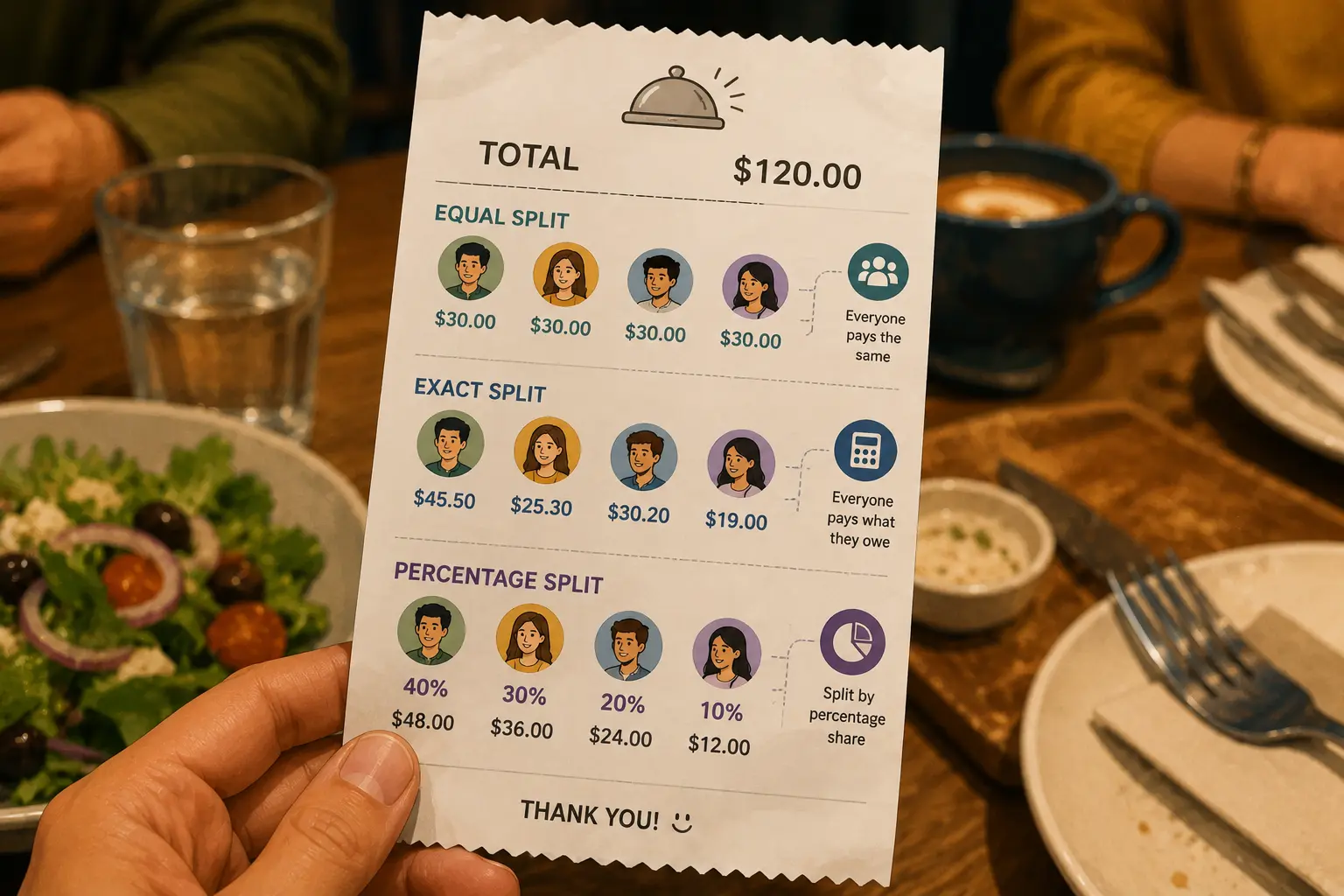
How to Split Restaurant Bills Fairly (Without the Awkwardness)
Few moments are more uncomfortable than the waiter placing a single bill in the middle of the table. Some people ordered appetizers and cocktails. Others had a salad and water. Someone already left. Now everyone is staring at the receipt wondering how to divide it fairly.
The good news is that splitting restaurant bills doesn't have to be stressful. Whether you're dining with friends, coworkers, roommates, or family, there are several simple ways to make sure everyone pays their fair share.
This guide covers the most common bill-splitting methods, when to use each one, and how technology can make the process much easier. For the broader picture beyond restaurant checks, see our How to Split Bills Fairly and How to Split Group Expenses guides.
Why Restaurant Bills Can Be Difficult to Split
Unlike rent or utility bills, restaurant expenses are rarely equal. One person might order an appetizer, a main course, dessert, and several drinks. Another may only have a starter and water.
If everyone pays exactly the same amount, some diners inevitably subsidize others. That's why choosing the right splitting method matters.
Method 1: Split the Bill Equally
Best for: similar orders, casual meals, pizza nights, family dinners, small differences in spending.
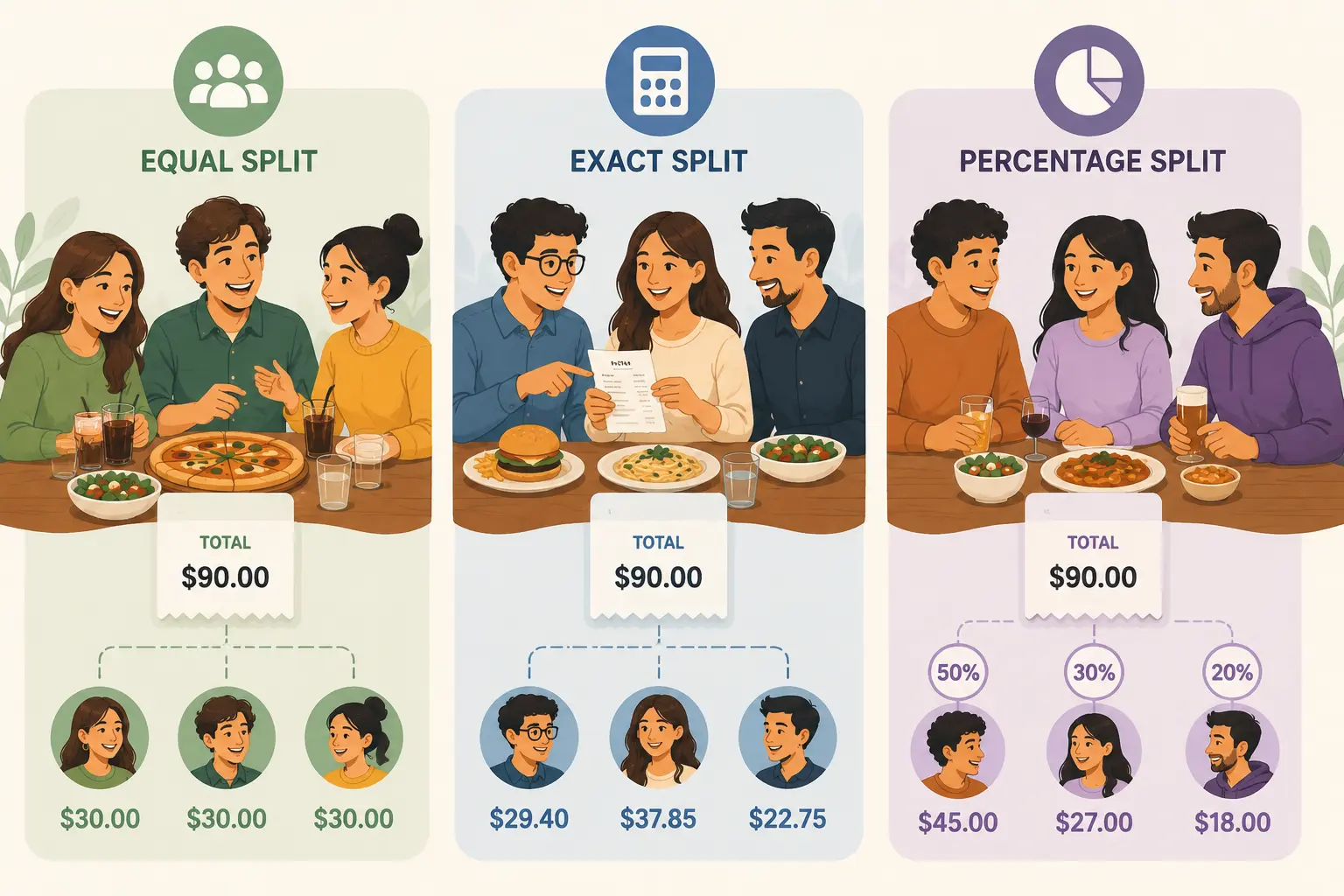
Everyone simply divides the total bill by the number of diners. Example: restaurant bill of $180 for six people - each person pays $30. Simple, fast, no calculations.
Pros: fastest option, easy to understand, works well when everyone ordered similar meals.
Cons: can feel unfair if spending varies significantly.
Method 2: Pay for What You Ordered
Best for: large groups, business lunches, different meal choices, expensive restaurants.
Instead of dividing everything equally, each person pays for the items they ordered:
| Person | Meal total |
|---|---|
| Alex | $24 |
| Sarah | $18 |
| Mia | $47 |
| Chris | $16 |
Each person pays their own total, plus their share of tax and tip if applicable. This is usually the fairest approach when meal prices differ.
Method 3: Split Shared Items Separately
Some restaurant expenses are shared - appetizers, dessert platters, bottles of wine, pitchers, shared pizzas. A common approach is to pay individually for personal meals and divide shared dishes equally among everyone who participated. This prevents people from paying for items they didn't enjoy.
Method 4: One Person Pays, Everyone Settles Later
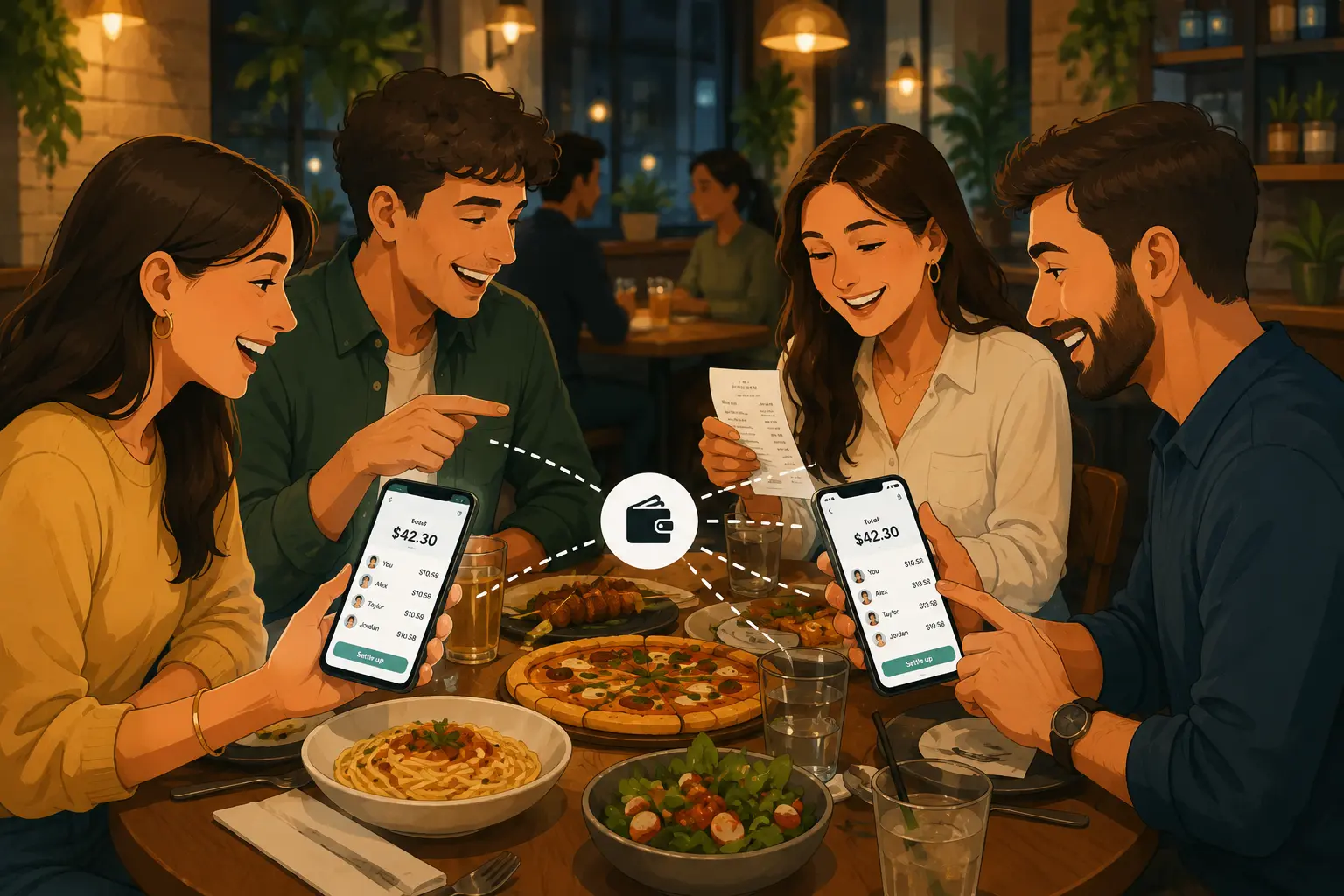
Many groups prefer having one person pay the full bill, then everyone reimburses them afterward using an expense-sharing app. This avoids waiting for multiple card transactions, cash calculations, and delaying the restaurant staff - particularly convenient for regular friend groups and travel companions.
Method 5: Ask for Separate Checks
Many restaurants are happy to split the bill before payment. This is often the easiest option if everyone ordered separately, the group isn't too large, and the restaurant supports separate billing. However, policies vary, especially during busy service.
Method 6: Rotate Who Pays
For friends who eat together frequently, constantly calculating every meal can become tedious. Instead, Alex pays this week, Mia pays next week, Chris pays the following week. Over time, spending tends to balance out. This works best when meals are generally similar in price.
Method 7: Split by Percentage
Sometimes equal splits don't make sense - one person ordered drinks for the table, someone joined only for dessert, or children shared meals with parents. Modern expense-sharing apps allow custom percentages or exact amounts, making these situations much easier to manage.
Method 8: Use a Bill Splitting App
For groups that regularly dine together, a dedicated bill splitting app is often the simplest solution. Instead of calculating everything manually, the app can record who paid, assign participants, split expenses equally or unequally, track balances over time, and calculate final settlements.
If you already use an expense splitting app with friends or roommates, restaurant bills become just another shared expense instead of a one-off calculation.
Don't Forget Tax and Tips
One of the biggest sources of confusion is deciding how to handle sales tax, service charges, and tips.
Split tax and tip equally - best when everyone ordered similarly priced meals.
Split tax and tip proportionally - people who ordered more expensive meals contribute a larger share. This is often the fairest option.
Each person tips individually - works when paying with separate checks.
Common Mistakes to Avoid
Assuming everyone wants an equal split - not everyone is comfortable paying for someone else's expensive meal. Discuss the approach before the bill arrives.
Forgetting shared items - shared appetizers and desserts are easy to overlook. Assign them before calculating totals.
Ignoring small purchases - extra sauces, coffee, dessert, additional drinks. These can noticeably change what each person owes.
Waiting too long to settle - if one person covers the bill, reimburse them soon afterward. Waiting weeks often leads to forgotten payments.
Which Method Is Best?
| Situation | Best method |
|---|---|
| Similar meals | Equal split |
| Everyone ordered differently | Exact amounts |
| Shared appetizers | Individual meals + shared items |
| Large friend groups | One person pays, settle later |
| Frequent dining | Rotate payments |
| Work lunches | Separate checks |
Why Expense Splitting Apps Make Restaurant Bills Easier
Restaurant bills are only one part of shared spending. The same friends often also share trips, fuel, concert tickets, groceries, and holiday rentals.
Instead of calculating every meal separately, many groups simply add each expense to a shared expense tracker. Apps like Squara automatically calculate balances over time, allowing everyone to see who owes what without repeated manual calculations. If you're already tracking shared expenses for a trip or household, restaurant bills fit naturally into the same system.
Why Squara Supports More Than One Way to Split a Bill
One thing I noticed while building Squara is that restaurant bills are where people first realize they need an expense-sharing app. A dinner starts with "I'll pay, just send me your share later," but once you add shared appetizers, drinks, tax, and tips, the math - and everyone's memory - gets messy. That's why Squara supports equal splits, exact amounts, and percentage-based splits. Different meals call for different ways of sharing the cost, and the app shouldn't force everyone into a single approach.
Final Thoughts
Splitting a restaurant bill shouldn't be the most memorable part of a great meal.
The best approach depends on the situation. Equal splits work well when everyone ordered similar items, while exact amounts are usually fairer when meal prices vary. For regular dining groups, keeping a running record of shared expenses is often more convenient than settling every meal individually.
Whatever method you choose, agree on it before the bill arrives. Clear expectations, a little transparency, and the right expense-sharing tools can turn an awkward end-of-meal calculation into a quick and stress-free process. For the full landscape of expense tracking apps, see our Best Expense Tracking Apps guide.
Frequently asked questions
Related articles
 Expense Sharing
May 27, 2026 · Artyom
How to Split Bills Fairly (Without Arguments)
Learn how to split bills fairly with roommates, friends, couples, and travel groups. Discover the best methods and apps to make shared expenses stress-free.
 Expense Sharing
May 29, 2026 · Artyom
How to Split Group Expenses Fairly (Without the Stress)
Learn how to split group expenses fairly with friends, roommates, and travel groups. Discover the best methods, common mistakes, and apps to simplify shared costs.
 Expense Sharing
May 25, 2026 · Artyom
Best Bill Splitting Apps (2026) – Top Apps to Split Bills Easily
Looking for the best bill splitting app? Compare the top apps for roommates, couples, travel, and shared expenses, including free options like Squara.
Squara is available on iOS and Android
Download it now, or leave your email for product updates.