
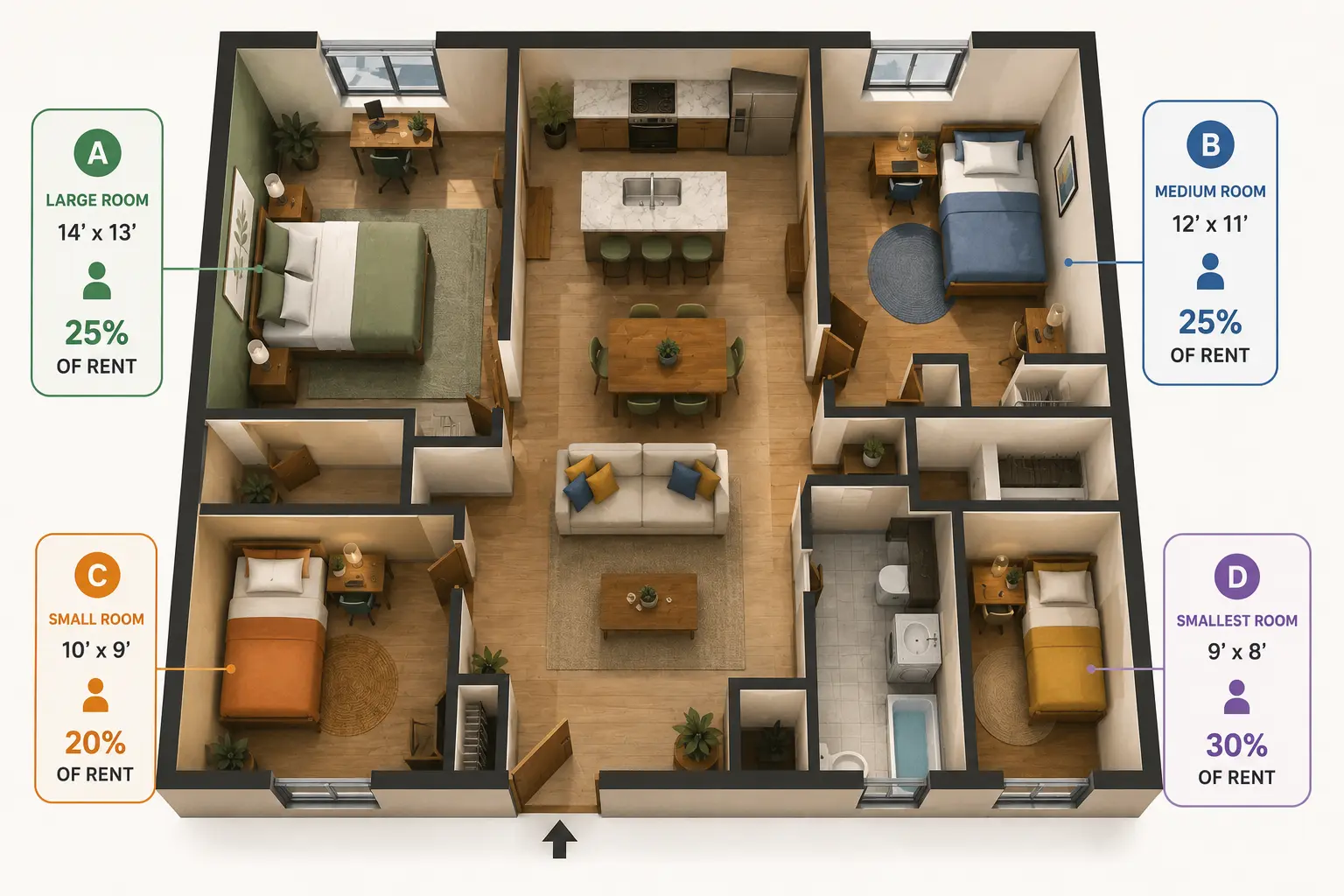
How to Split Rent Fairly (7 Simple Methods for Roommates)
Moving in with roommates can save thousands of dollars every year - but deciding how to split rent isn't always straightforward.
Should everyone pay the same amount? What if one roommate has the master bedroom? What if someone works from home or has an ensuite bathroom?
There isn't a single "correct" way to divide rent. The fairest method depends on your apartment, your roommates, and what everyone agrees is reasonable.
In this guide, we'll cover the most common ways to split rent, when each method makes sense, and how to keep shared housing expenses organized long after the first month's payment. For the broader picture of shared living costs beyond rent, see our How to Split Bills Fairly and How to Split Group Expenses guides.
The Best Time to Decide
The biggest mistake roommates make is waiting until the first rent payment is due. Before anyone signs the lease, agree on how rent will be divided, how utilities will be shared, how household supplies will be tracked, when everyone needs to pay, and how shared expenses will be recorded.
Having this conversation early avoids awkward discussions later.
Method 1: Split Rent Equally
Best for: similar bedrooms, equal access to amenities, two or three roommates, apartments with comparable room sizes.
This is the simplest method - everyone pays the same amount. Example: monthly rent of $2,400 for three roommates - each person pays $800. Easy to calculate and easy to remember.
Pros: simple, transparent, no calculations each month.
Cons: may not feel fair if bedrooms differ significantly.
Method 2: Split Rent by Bedroom Size
If one roommate has a much larger room, they may choose to pay more. This is one of the most common approaches in shared apartments.
Example - monthly rent of $2,400:
| Room | Monthly rent |
|---|---|
| Master bedroom | $1,000 |
| Medium room | $750 |
| Small room | $650 |
Everyone pays according to the space they occupy.
Factors to consider beyond square footage: ensuite bathroom, walk-in closet, balcony, better views, more natural light, private entrance. These features often increase the perceived value of a room.
Method 3: Split Rent by Income
Some roommates choose to contribute based on income rather than room size. This is less common among friends but may work well for couples, family members, or long-term shared households.
Example: rent of $2,000, where Person A earns 70% of household income and Person B earns 30%. Instead of paying equally, Person A pays $1,400 and Person B pays $600. This approach focuses on affordability rather than identical contributions.
Method 4: Use a Rent Split Calculator
When several factors influence rent, calculators can help. Some account for room size, private bathrooms, shared spaces, amenities, and occupancy. These tools provide a neutral starting point for discussion, though roommates should always agree on the final arrangement together.
Method 5: Adjust for Shared Spaces
Not every apartment has identical access to common areas - consider parking spaces, storage units, home offices, basement access, or garden and patio use. If one roommate has exclusive access to an amenity, paying slightly more rent may feel fair to the group.
Method 6: Review Rent Annually
Living situations change - someone starts working remotely, someone gets a partner, someone changes bedrooms. Reviewing rent once a year helps ensure the arrangement still reflects how the home is being used.
Method 7: Track Shared Household Expenses Separately
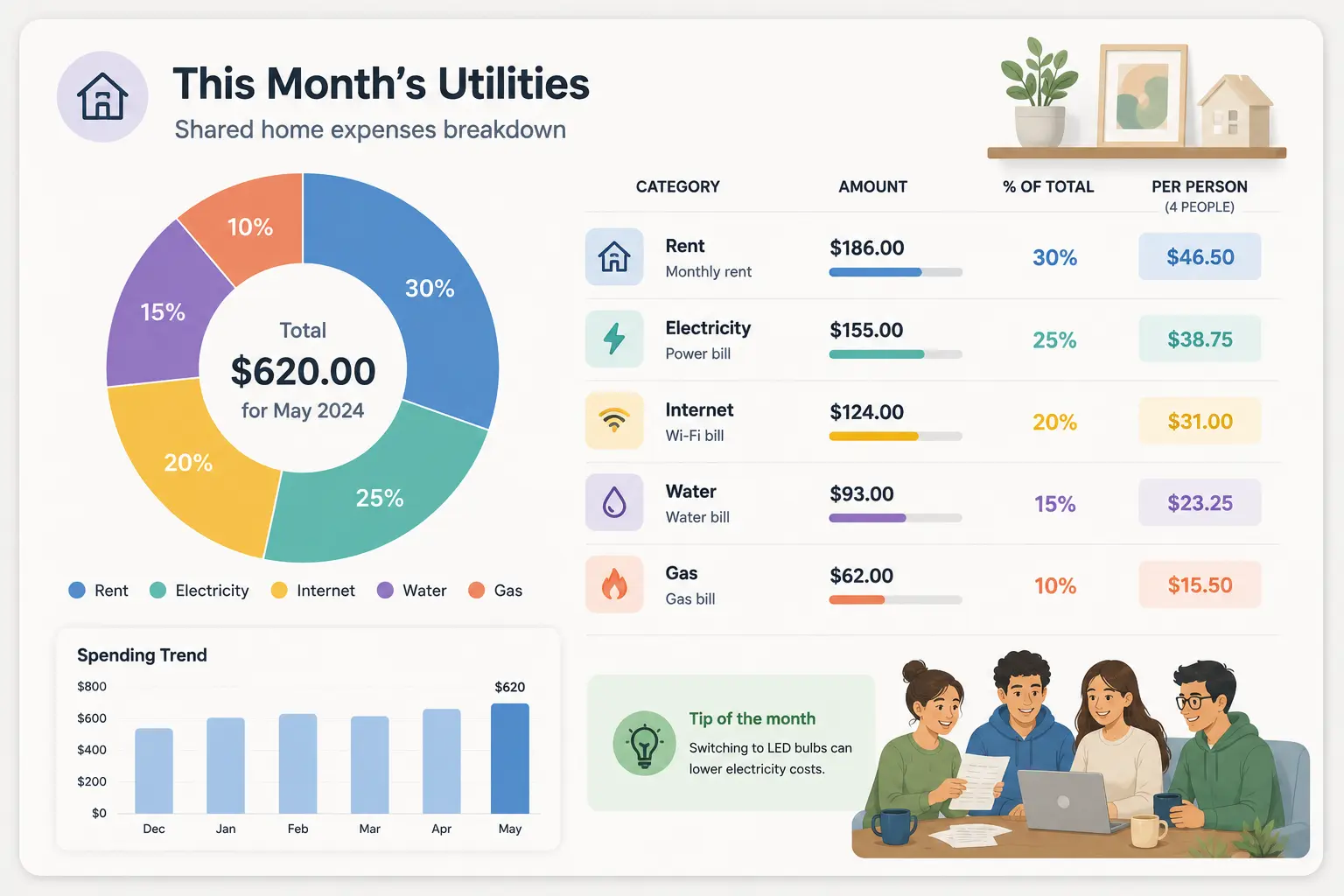
Rent is only one part of living together. Roommates also share expenses such as electricity, internet, water, gas, groceries, cleaning supplies, toiletries, and streaming subscriptions.
Rather than including everything in the rent calculation, many households keep rent fixed and track shared expenses separately. This keeps the rent agreement simple while ensuring everyone contributes fairly to day-to-day costs.
Should Utilities Be Included?
Usually, no. Most households keep rent and utilities separate - this makes it easier to account for seasonal changes in electricity, heating, water, and gas. An expense-sharing app can automatically keep track of these variable costs throughout the month.
Common Mistakes to Avoid
Assuming equal means fair - equal payments aren't always fair. If one roommate has significantly more space or amenities, an adjusted split may make everyone happier.
Not writing down the agreement - even among close friends, it's helpful to document rent amounts, payment dates, utility responsibilities, and household expense rules. It avoids misunderstandings later.
Forgetting household purchases - dish soap, toilet paper, coffee, trash bags, cleaning products. Tracking these expenses prevents one roommate from quietly covering everything.
Waiting until the end of the month - record shared expenses as they happen. Trying to remember who bought groceries three weeks ago rarely ends well.
The Best Way to Track Roommate Expenses
While rent itself usually stays the same every month, shared expenses constantly change. A dedicated bill splitting app helps roommates track groceries, split utility bills, record household purchases, calculate balances automatically, see who paid for what, and settle everything at the end of the month.
Instead of chasing receipts or scrolling through old messages, everyone can view the same up-to-date information. If you're weighing Squara against the more established name in this space, see our Free Splitwise Alternatives guide.
What I Learned About Roommates While Building Squara
One thing I learned while building Squara is that roommates rarely argue about rent itself - they argue about everything around it. Rent is usually agreed upon once and stays the same. The real friction comes from groceries, internet bills, electricity, cleaning supplies, and all the small purchases that happen throughout the month. That's why Squara focuses on ongoing shared expenses, giving everyone a clear history of who paid for what and making end-of-month settlements much simpler.
Final Thoughts
There isn't a universal formula for splitting rent fairly. The best approach is the one that reflects your living situation and that every roommate understands and agrees to before moving in.
Once rent is decided, keeping track of shared household expenses separately makes life much easier. Groceries, utilities, cleaning supplies, and other day-to-day purchases can quickly become difficult to manage without a shared system.
By combining a clear rent agreement with transparent expense tracking, roommates can spend less time worrying about money and more time enjoying their home together. For a full rundown of apps built for exactly this, see our Best Apps for Roommates roundup, or, for the other big recurring household cost, our How to Split Utilities guide, or our Household Expense Tracker guide for tracking everything beyond rent itself, or our Best Expense Tracking Apps guide for the full landscape of options.
Frequently asked questions
Continue reading
Best Apps for Roommates (2026) – Split Bills, Chores & Rent →Related articles
 Roommates
February 5, 2026 · Artyom
How to Split Expenses With Roommates (Without the Awkward Conversations)
A practical guide to splitting rent, utilities, groceries, and household expenses with roommates - and the best free app to make it effortless.
 Roommates
June 6, 2026 · Artyom
How to Split Utilities Fairly (Roommate Guide)
Learn how to split utility bills fairly with roommates. Discover the best methods for dividing electricity, internet, water, gas, and household expenses.
 Roommates
June 8, 2026 · Artyom
Household Expense Tracker: Best Apps & Tips (2026)
Looking for the best household expense tracker? Learn how to track shared household expenses, split bills fairly, and compare the best apps for roommates, couples, and families.
Squara is available on iOS and Android
Download it now, or leave your email for product updates.