

Vacation Budget Planner: Plan Your Trip Budget in 7 Easy Steps
Vacations should be exciting - not stressful. But without a plan, travel costs can add up faster than expected: flights, hotels, meals, transportation, activities, travel insurance, souvenirs. Even a short trip can end up costing much more than your original estimate.
A vacation budget planner helps you estimate your expenses before you leave, monitor your spending during your trip, and avoid unpleasant surprises when you return home.
Whether you're traveling alone, with your partner, or as part of a larger group, a little planning goes a long way. Once your trip is underway, see our Group Trip Expense Tracker and Best Travel Expense Tracker Apps guides for tracking the actual spending against this plan.
Why Every Trip Needs a Budget
Many travelers only think about the cost of flights and hotels. In reality, those are often just the beginning. A complete travel budget should include transportation, accommodation, food, activities, shopping, insurance, emergency spending, and currency exchange fees.
Planning these costs in advance makes your trip far less stressful.
Step 1: Set Your Total Budget
Start with one number. Ask yourself how much you can comfortably afford to spend on this trip - this should include savings, planned spending, and an emergency buffer.
Avoid budgeting right up to your financial limit. Leaving 10-15% for unexpected costs provides useful flexibility.
Step 2: Estimate Transportation Costs
Transportation usually represents one of the largest travel expenses.
Before arrival: flights, trains, bus tickets, airport parking.
During the trip: rental cars, fuel, parking, public transportation, taxis, ride-sharing.
Researching these costs before your trip can prevent major budget surprises.
Step 3: Budget for Accommodation
Include every accommodation-related expense: hotels, Airbnb, hostels, resort fees, cleaning fees, tourist taxes.
If you're traveling with friends, decide in advance how accommodation costs will be divided.
Step 4: Estimate Food Costs
Food budgets vary dramatically depending on your travel style:
| Travel style | Daily food budget |
|---|---|
| Budget | $20-40 |
| Mid-range | $50-80 |
| Premium | $100+ |
Don't forget coffee, snacks, drinks, and grocery shopping - these small purchases quickly add up.
Step 5: Plan Activities
Many travelers underestimate activity costs - museums, tours, theme parks, boat trips, national park entry fees, ski passes, concerts. Booking in advance can often reduce costs.
Step 6: Create an Emergency Fund
Unexpected expenses happen: delayed flights, lost luggage, medical care, replacement clothing, taxi changes. A good rule is setting aside 10-15% of your total budget for emergencies. If you don't need it, even better.
Step 7: Track Expenses During the Trip
Planning is only half the process. You also need to record your actual spending. Instead of relying on memory after returning home, record expenses as they happen - this lets you stay within budget, see where your money goes, avoid forgotten purchases, and keep shared expenses organized.
Sample Vacation Budget
| Category | Budget |
|---|---|
| Flights | $700 |
| Accommodation | $900 |
| Food | $450 |
| Transportation | $180 |
| Activities | $350 |
| Shopping | $200 |
| Emergency fund | $250 |
Estimated total: $3,030
Common Vacation Budget Mistakes
Only budgeting flights and hotels - many travelers underestimate airport transfers, tourist taxes, fuel, snacks, and souvenirs. These often become significant expenses.
Forgetting currency exchange fees - international travel frequently includes ATM fees, exchange rates, and credit card fees. These costs deserve a place in your budget.
Ignoring shared expenses - if you're traveling with friends or family, you'll likely share accommodation, fuel, groceries, restaurants, and activities. Tracking these expenses during the trip makes final settlements much easier.
Not leaving room for flexibility - trips rarely go exactly as planned. A small emergency buffer prevents unexpected expenses from becoming financial stress.
Planning vs Tracking: What's the Difference?
Many people use the terms interchangeably, but they solve different problems.
Vacation budget planner - helps answer "how much should this trip cost?" Used before traveling.
Travel expense tracker - answers "how much have we actually spent?" Used during the trip.
The best travel experiences use both.
Why Squara Complements a Vacation Budget
Squara isn't designed to replace your vacation budget. Instead, it helps you stick to it. As your trip progresses, you can record hotels, meals, fuel, attractions, shopping, and shared transportation. The app automatically updates balances, allowing everyone in the group to see exactly what has been spent and who paid.
Useful features:
- Unlimited expense tracking
- Multi-currency insights
- Equal, percentage, and custom splits
- Activity history
- Settlement confirmation
- Cloud synchronization
- No advertisements
Why Small Purchases Blow Vacation Budgets, Not Big Ones
One thing I learned while building Squara is that most people don't go over budget because of one expensive purchase. It's the accumulation of dozens of small expenses - coffee at the airport, public transport, snacks, museum tickets, and convenience purchases - that slowly push the total higher than expected. That's why I recommend creating a budget before the trip and then recording expenses as they happen. Seeing your spending in real time makes it much easier to stay on track without constantly checking your bank account.
Final Thoughts
A successful vacation doesn't happen by accident - it starts with a realistic plan.
Creating a vacation budget before you travel helps you understand how much your trip is likely to cost, while tracking expenses during the trip helps you stay on course and avoid unpleasant surprises.
If you're traveling with other people, combining a clear budget with a shared expense tracker makes managing money much easier. Everyone knows what has been spent, who paid, and how much remains in the budget, allowing you to spend less time worrying about finances and more time enjoying your trip. See our How to Split Group Expenses, How to Split Restaurant Bills, Best Expense Splitting Apps, and How to Split Bills Fairly guides for more, or Free Splitwise Alternatives if you're weighing Squara against the more established name in this space. If your trip runs longer than a typical vacation, see our Best Backpacking Budget Apps guide instead.
Frequently asked questions
Continue reading
Best Backpacking Budget Apps (2026) – Track Travel Expenses →Related articles
 Travel
June 24, 2026 · Artyom
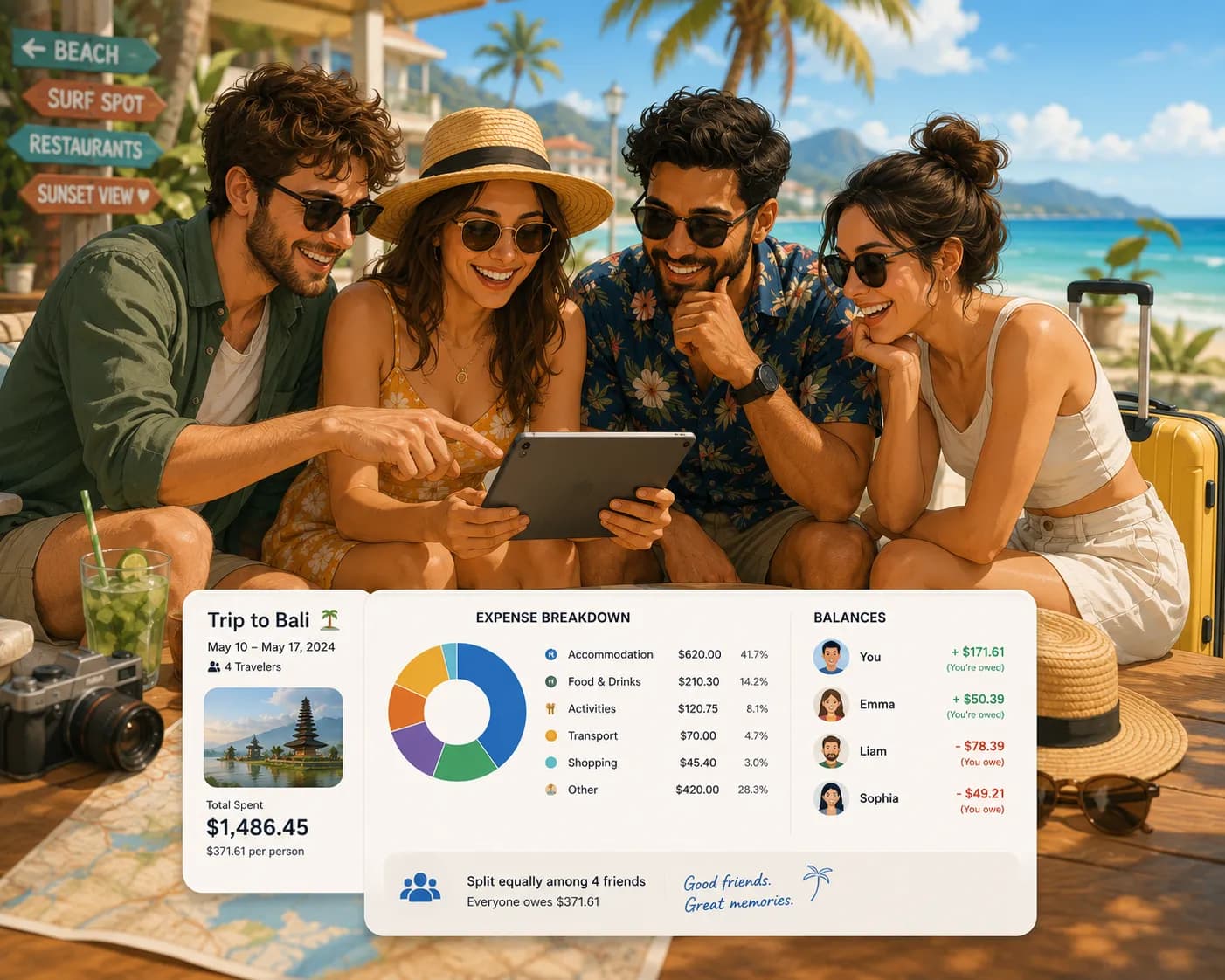
Group Trip Expense Tracker: Track Shared Travel Expenses Easily
Learn how to track group trip expenses without spreadsheets. Discover the best way to split hotels, meals, transport, and activities with friends.
 Travel
June 28, 2026 · Artyom
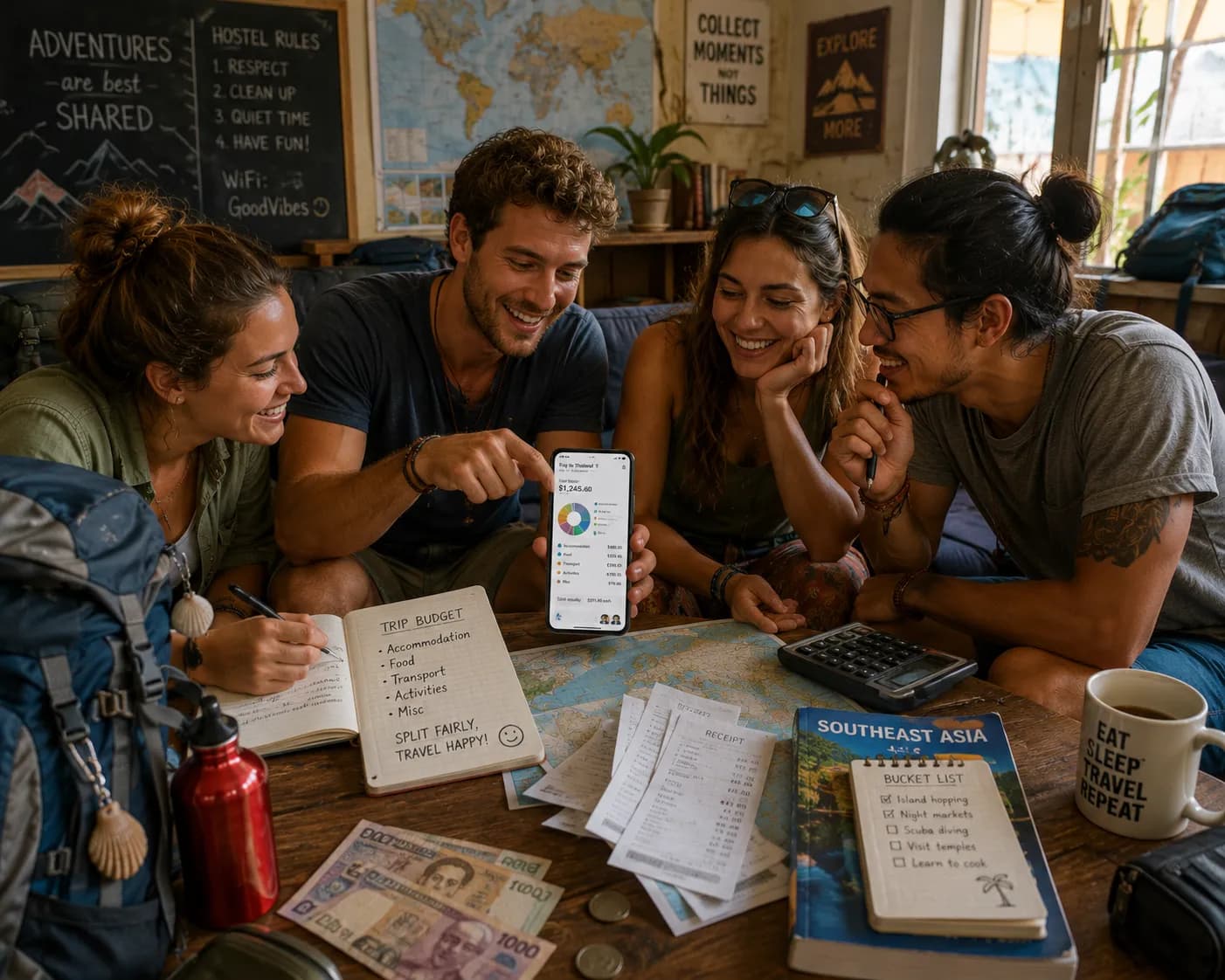
Best Backpacking Budget Apps (2026) – Track Travel Expenses
Compare the best backpacking budget apps for long-term travel. Track daily spending, split group expenses, manage multiple currencies, and stay on budget.
 Travel
June 22, 2026 · Artyom
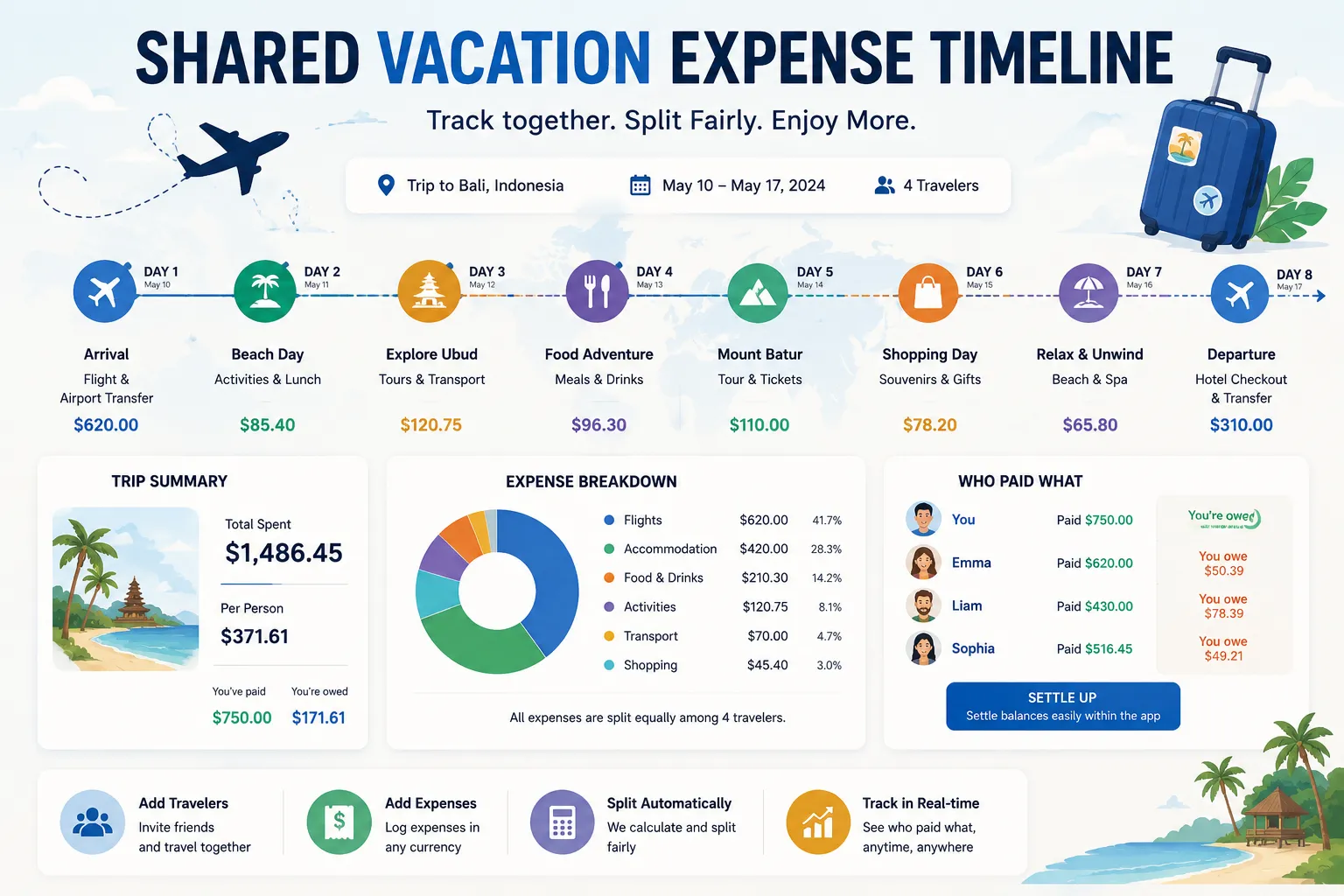
Best Travel Expense Tracker Apps (2026) – Track Trip Expenses Easily
Discover the best travel expense tracker apps for vacations, backpacking, business trips, and group travel. Compare features, pricing, and the best free options.
Squara is available on iOS and Android
Download it now, or leave your email for product updates.